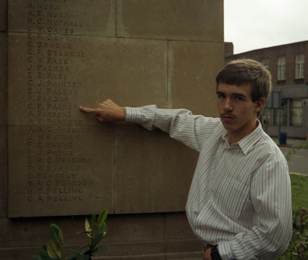
• Skip to primary navigation
  • Skip to main content
  • Skip to footer
Stockwell War Memorial

Stockwell War Memorial

Friends of Stockwell War Memorial & Gardens

  • Home
  • Order the book (free download)
  • About
  • The men of Stockwell
  • History of the Memorial
  • Centenary Exhibition
  • Contact
  • Newsletter
  • Friends Group

Featured

Cecil Ernest Philcox

17 August 2015 by SWM

Cecil Ernest Philcox

C. E. Philcox
Lieutenant (temp), South Staffordshire Regiment, 1st Battalion
Died on 24 May 1917, aged 21
Awards Military Cross; mentioned in despatches
CWGC: “Son of Alice E. and the late Alfred James Philcox.”
Remembered at Achiet-le-Grand Communal Cemetery Extension, France, on the war shrine at St Michael’s Church, Stockwell Park Road, London SW9 0DA and at family memorial at West Norwood Cemetery

Brother of Percy William Arthur Philcox

Cecil Ernest Philcox was born in 1895. After attending Dulwich College he worked in a timber broker’s office in the City (his father was a timber merchant). He enlisted in the ranks of 12th Battalion of the London Regiment (The Rangers). One of his two brothers, Percy William Arthur Philcox, was killed in action with the Rangers on 8 May 1915.

Cecil was transferred to the Inns of Court Officers Training Corps at Berkhamsted on 20 April 1915 and in July was given a temporary commission in the 10th (Reserve) Battalion of the South Staffordshire Regiment at Harrogate. He took part in action at High Wood, Mametz, Beaumont-Hamel, Arras, Serre, Martinpuich, Bullecourt.

In November 1916 Cecil was appointed Battalion Bombing Officer. He died on 24 May 1917 at No. 45 Casualty Clearing Station near Bullecourt of wounds received three days earlier when a defective No. 5 Mills grenade thrown by Private T. Hindley exploded during training, fracturing Cecil’s skull and injuring Hindley himself and Lance Corporal Carrington. A court of enquiry held in the field, at which three witnesses gave evidence, and Hindley made a statement, concluded that no one was to blame for Cecil’s death. All described how Cecil had given the order to throw, how Hindley’s throw was a good one and made in the “regulation manner” and how the grenade exploded only six feet away from the bombing party.

Cecil was mentioned in despatches and awarded the Military Cross for conspicuous gallantry and devotion to duty.

Cecil’s family lived at 255 South Lambeth Road. His father, Alfred James Philcox, who died in 1913, was a timber merchant, originally from Kentish Town, north London. His mother, Alice Eliza Philcox was born in Lambeth. After Cecil and his brother Percy died in the war, two children survived: Alfred Reginald, who in 1911 was working as a clerks in a timber merchant’s office (presumably his father’s) and Ethel Beatrice Philcox.

Information from the censuses
On the night of the 1911 census Cecil Ernest Philcox, aged 15 and still at school (Dulwich College), was at his cousin’s house at 29 Kingsmead Road, Streatham. Leonard Wilfred Philcox, 13, was the son of Mervyn Philcox, 50, a watch and jewellery dealer born in Wandsworth, and Martha Jane Philcox, 51, from Lambeth. Meanwhile, his family were at 255 South Lambeth Road.

Alfred James Philcox, 59, was a timber merchant, born in Kentish Town, north London. His wife, Alice Eliza Philcox, 55, was born in Lambeth. They had five children: Cecil; Alfred Reginald Philcox, 22, and Percy William Arthur Philcox, 19, both clerks in a timber merchant’s office (presumably working with their father); Ethel Beatrice Philcox, 18; and one other. All the children were born in Lambeth. Florence Maud Philcox, 19, a niece born in Lambeth, lived with the family, as did Kate Elizabeth Percival, a 20-year-old single domestic servant from Rotherhithe, south-east London.
Filed Under: Featured, P names, St Michael's War Shrine, Stockwell War Memorial Tagged With: 1917, Accident, age 21, Brothers, France, officer

Arthur Penn

17 August 2015 by SWM

Arthur Penn
Arthur Penn

A. Penn
Service no 44243
Serjeant, Royal Engineers, 74th Field Coy.
Born in Clapham; enlisted in London; lived in Clapham
Killed in action on 19 March 1917, aged 23
CWGC: “Son of John T. D. and Victoria Penn, of 73 Union Rd., Clapham, London.”
Remembered Faubourg d’Amiens Cemetery, France

De Ruvigny’s Roll of Honour 1914-1918

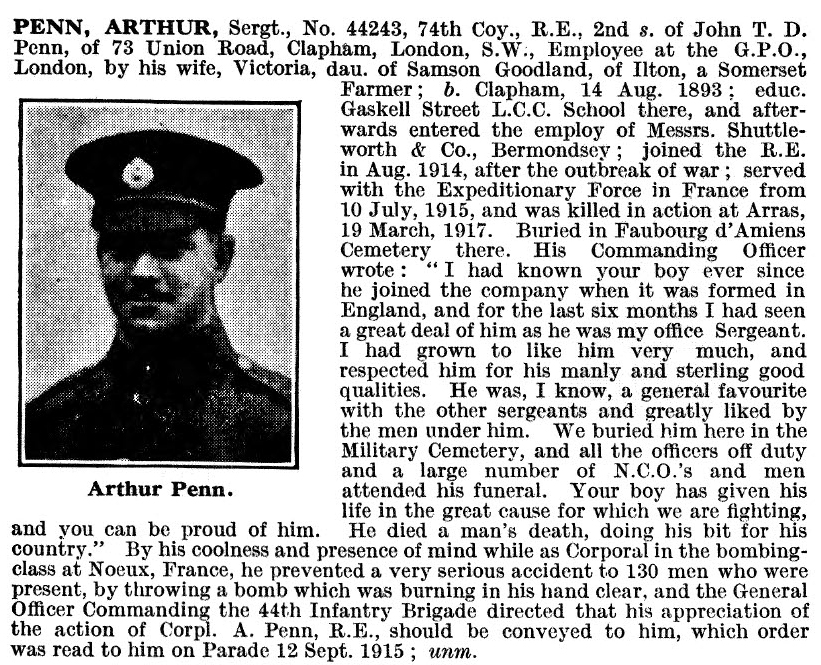
PENN, ARTHUR, Sergt., No 44243, 74th Coy., R.E., 2nd s. of John T. D. Penn, of 73 Union Road, Clapham, London, S.W., Employee at the G.P.O., London, by his wife, Victoria, dau. of Samson Goodland, of Ilton, a Somerset Farmer; b. Clapham, 14 Aug. 1893; educ. Gaskell Street L.C.C. School there, and afterwards entered the employ of Messrs. Shuttleworth & Co., Bermondsey; joined the R.E. in Aug, 1914, after the outbreak of war; served with the Expeditionary Force in France from 10 July 1915, and was killed in action at Arras, 19 March 1917. Buried in Faubourg d’Amiens Cemetery there. His Commanding Officer wrote: “I had known your boy ever since he joined the company when it was formed in England, and for the last six months I had seen a great deal of him as he was my office Sergeant. I had grown to like him very much, and respected him for his manly and sterling good qualities. He was, I know, a general favourite with the other sergeants and greatly liked by the men under him. We buried him here in the Military Cemetery, and all the officers off duty and a large number of N.C.Os and men attended his funeral. Your boy has given his life in the great cause for which we are fighting, and you can be proud of him. He died a man’s death, doing his bit for his country.” By his coolness and presence of mind while as Corporal in the bombing-class at Noeux, France, he prevented a very serious accident to 130 men who were present, by throwing a bomb which was burning in his hand clear, and the General Officer Commanding the 44th Infantry Brigade directed that his appreciation of the action of Corpl. A. Penn, R.E., should be conveyed to him, which order was read to him on Parade 12 Sept. 1915; unm.

Information from the censuses

In 1911 Arthur Penn, one of five children of John Thomas Doody Penn, a Post Office sorter, 53 from Chatham, Kent and Victoria Penn, 55, of Ilton, Somerset, was working as a chauffeur. Three children, all born in Clapham, lived at home in 5 rooms at 73 Union Road: Arthur; Daisy Penn, 26; Dora Victoria Penn, 20. A boarder, William Drowley, a single 21-year-old auctioneer’s clerk from Ringwould, Kent, boarded with the family. The family is found at the same address in 1901. In 1891 they lived at No 100 Union Road, and in 1881 they were at 6 Richard Street, Lambeth.

Filed Under: Featured, P names, Stockwell War Memorial Tagged With: 1917, age 23, France, KIA

William Reginald Guy Pearson

17 August 2015 by SWM

W. R. G. Pearson
Captain, Royal Air Force, No. 4 Training Depot Station
Died in a flying accident on 20 June 1918, aged 21
Son of Reginald and Minnie Pearson
Remembered at Eastham, St Mary, Cheshire


William Reginald Guy Pearson
William Reginald Guy Pearson. Captain William Reginald Guy Pearson, R.A.F., accidentally killed at a Northern aerodrome, was the second son of Dr. and Mrs. Spencer Pearson, of Clapham Road, London S.W. An exceptionally skillful and careful pilot, he was officially credited with having brought down eleven enemy machines, and had been mentioned in despatches. From The War. Illustrated Album Deluxe: the story of the great European war told by camera, pen and pencil, by Sir John Alexander Hammerton. The Amalgamated Press, 1919.


From Flight, 4 July 1918
Capt. WILLIAM REGINALD GUY PEARSON, R.A.PV, who lost his life on June 20th at a Northern aerodrome owing to a collision in the air, in which Lieuts. McFarlane and Flynn were also killed, was the second son of Dr. and Mrs. Spencer Pearson, of Clapham Road, S.W. He was 21 years of age, and was educated at Ashdown Park and Berkhampsted, where his classical attainments promised a brilliant University career. At the outbreak of war he enlisted in the Empire Battalion, Royal Fusiliers, and later, receiving a commission in the A.S.C., proceeded to France in January, 1915. He very shortly afterwards joined the R.F.C. in France, and acted for several months as an artillery observer. Returning to England, he completed his training as a Scout pilot, and served in France in a fighting squadron for nearly a year, during which time he had over fifty encounters with enemy machines, and was officially credited with having brought down eleven German aeroplanes, many of them two-seaters. He became a flight commander and gained his captaincy, being mentioned in despatches. Capt. Pearson was a flying instructor at the time of his death, and was considered one of the most careful and skilful of pilots.


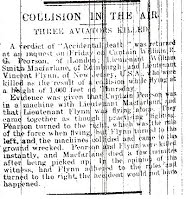
E026 W R Guy Pearson paper report 26-06-1918COLLISION IN THE AIR – THREE AVIATORS KILLED
A verdict of “Accidental death” was returned at an inquest on Friday on Captain William R. G. Pearson, of London, Lieutenant William Smith Macfarlane, of Edinburgh, and Lieutenant Vincent Flynn, of New Jersey, U.S.A., who were killed as a result of a collision while flying at a height of 1,000 feet on Thursday.

Evidence was given that Captain Pearson was in a machine with Lieutenant Macfarlane, and that Lieutenant Flynn was flying alone. They came together as though practising fighting. Pearson turned to the right, which was the rule of the force when flying, but Flynn turned to his left, and the machines collided and came to the ground wrecked. Pearson and Flynn were killed instantly and Macfarlane died a few minutes after being picked up. In the opinion of the witness, had Flynn adhered to the rules, and turned to the right, the accident would not have happened.


E026 W R Guy Pearson plaque
The wooden plaque inside the church at Eastham, St Mary, Cheshire, and the burial register from the church. Pearson is no. 995. Photo © Tracey Fisher


Record of Pearson’s 11 ‘hits‘


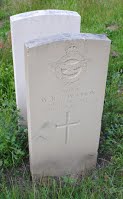
Pearson’s CWGC stone in the churchyard at Eastham, St Mary, Cheshire. The stone was put up in 2003 and is positioned at the foot of the grave. Photo © Tracey Fisher
Pearson’s family headstone is at the head, and includes a representation of a biplane and the Royal Flying Corps logo. Photos © Tracey Fisher

According to a report in the Brixton Free Press, Pearson’s father, Dr. Reginald Spencer Pearson, who had played a major part in raising money for the Stockwell Memorial Committee, was too distressed to attend its unveiling in May 1922:

[A]  gentleman whose absence was the cause for general regret was Dr. Pearson, who had identified himself so much with the progress of  the movement, and who regards the memorial in the light of the tomb of his own dear son. But Dr. Pearson felt that he could not bear the strain which the ordeal of unveiling and dedicating this memorial would impose upon him.

Information from the censuses

In 1911 William Reginald Guy Pearson lived in a 10-room house, 14 Lake Street, Leighton Buzzard. His father, Reginald Spencer Pearson, 45, a doctor from Workington, Cumbria, and mother, Minnie Savile Pearson, 40, from Wakefield, Yorkshire, had four children besides William:
James Pearson, 15, born at Parbold, Lancashire (on the 1901 census)
Kathleen Mary Pearson, 7, born at Islington, London
Richard Cuthbert Liverton Pearson, 4, born at Leighton Buzzard, Bedfordshire
Hubert Edward Spencer Pearson, 1, born at Leighton Buzzard, Bedfordshire
There were two ‘visitors’ (probably servants) in 1901, Florence Hughes Kinchliff, 27, a single mother’s help from Wakefield, and Dorothy Morris Tabor, 24, a mother’s help from St George’s in the East, London. In 1901, when the family lived at 48, Mildmay Park, Islington, there were 2 servants: a mother’s help and a page.

Filed Under: Featured, P names, Stockwell War Memorial Tagged With: 1918, Accident, flying corps, officer

Charles Frederick Parker

16 August 2015 by SWM

Charles Frederick Parker
Charles Frederick Parker © Ray Coleman

C. F. Parker
Service no. 142427
Private, Machine Gun Corps (Infantry), 34th Coy.
Killed in action 21 March 1918, aged 34
Remembered at Arras Memorial, France

Charles Frederick Parker was born on 23 November 1884 at 95 Dunnetts Road, St Pauls, Deptford (later, on various censuses his birthplace is given as Peckham and Deptford). He was one of 10 children born to William James Parker, an engineer originally from Liverpool, and Elizabeth Emma Rutt from Southwark, south London.

William and Elizabeth married on 21 October 1871 at Christ Church, Blackfriars. In common with many families at the time, they moved frequently, probably following work around London.

We can trace their movements from the censuses: In 1881 they lived at 13 Upper Winchester Street in Islington; in 1891 they were at 115 Bridge Street, Greenwich; in 1901 they were at 31 Foreign Street, Camberwell and by 1911, aged 68 and 59, they were in Southend on Sea, living with two of their three surviving children.

On October 15 1905 William and Elizabeth’s son Charles, aged 20, and Daisy Laura Hales, 21, married at Christ Church, Blackfriars (the church where William and Elizabeth had married). Daisy’s address was given on the marriage certificate as 32 Collingwood Street (now Columbo Street)* and Charles was living at 48 Brunswick Street (off Stamford Street). Daisy was born in Highgate, the daughter of a journeyman baker, James Hales.

However, in 1901, according to the census, Daisy was living at 2 Redan Terrace, near Elam Street, on the Camberwell/Brixton borders*. Elam Road is adjacent to Foreign Street, where Charles Frederick Parker was living. It seems likely that this was when and where Charles and Daisy, who were both 16 in 1901, met. The 1901 census gives Charles’ occupation as “repairer of bicycle tyres”.

Charles Frederick Parker
Charles Frederick Parker © Ray Coleman

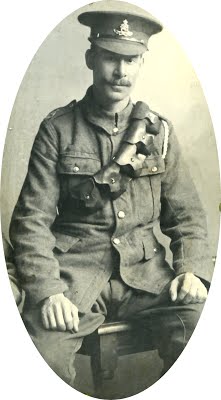
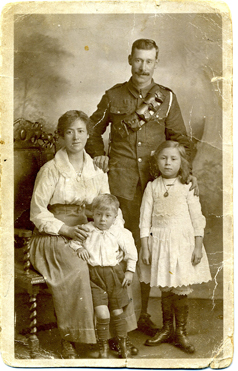
The picture of the Parker family was taken on 10 September 1916 and shows Charles in his uniform with Daisy and their two children, Elsie and William (Bill). Eighteen months later, Charles was dead.

The 1911 census shows that Charles and Daisy Parker were living in two rooms on the Blackfriars Peabody Estate (Block Q) with their daughter, Elsie Daisy Parker, then aged 2. Charles was working as an assistant stationary engineerman.

When Charles joined up he was employed by the London Hydraulic Company as an engineer. Before electricity became the primary source of power, heavy lifting was carried out using high pressure water piped underground. Probably its most famous application was to lift the bascules of Tower Bridge.

Charles enlisted in the Royal Field Artillery (Service no 2578) in Brixton before transferring to the 34th Company Machine Gun Corp (Infantry) as number 142427.

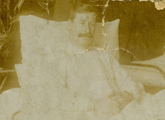
This faded picture, taken on 4 February 1917, shows Charles recovering from trench foot at The Cardiff Soldiers’ Rest, St Mary Street, Cardiff. Trench foot is caused by continuous immersion in water. If untreated, trench foot could turn gangrenous and result in amputation. The water table was often less than one metre below the surface and digging in, to avoid shells and bullets, often meant living in mud. Despite this, British commanding officers, unlike their German counterparts, refused to give up any ground, however unsuitable.

Charles Frederick Parker
Charles Frederick Parker in hospital

‘Operation Michael’, the momentous German counter-offensive known as the ‘Kaiser’s Battle’ (and sometimes as the Second Battle of the Somme, since to some extent it took place on the same territory), was launched along a 50-mile front at dawn on 21 March 1918, following a massive preliminary bombardment. The Germans broke the British lines in several places and the 34th Machine Gun Corps found itself virtually surrounded.

Charles Frederick Parker died that day. Unfortunately, his grave was among those which the Army Graves Service was unable to trace after the war and he is therefore commemorated on Bay 10 of the Arras Memorial, France.

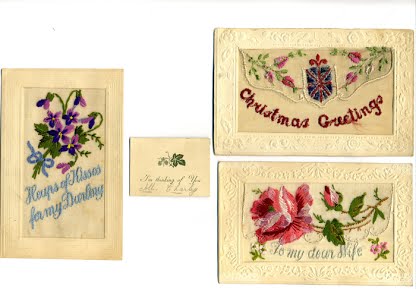
Postcardsfront
© Ray Coleman
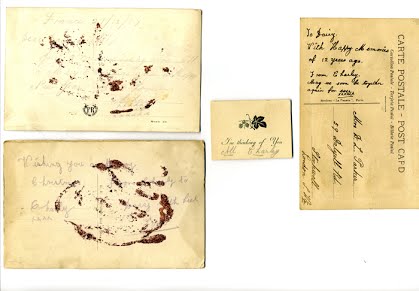
Postcardsback
© Ray Coleman

While away at the Front, Charles sent these beautiful postcards to his family. They are a poignant reminder of the contrast of worlds between the War and home life. While Charles was no doubt faced with unspeakable horrors he found time to send back these sweet and special greetings to his wife and young family.

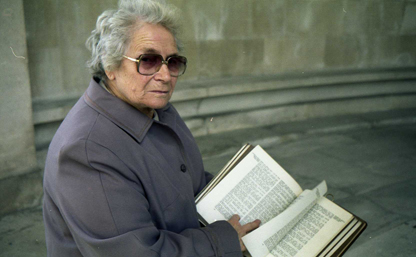
Elsie points to her father's listing in the Book of Remembrance at Arras Memorial in France
Elsie points to her father’s listing in the Book of Remembrance at Arras Memorial in France © Ray Coleman
David at Stockwell War Memorial
David at Stockwell War Memorial © Ray Coleman

The families left behind

Charles’s daughter Elsie, who was married in St Andrew’s Church, Landor Road, London SW9, visited Arras with two of her grandchildren.

Many thanks to Ray Coleman for family information and use of material.
All family assets relating to Charles Parker are copyright Ray Coleman. All rights reserved.

* Collingwood Street was next to Christ Church, Blackfriars (behind the railings in the picture on the left), but has now been replaced by Columbo Street. The cottages have been replaced by a pub (the brick building in the engraving) and a sports centre. Elam Street survives but most of the surrounding streets do not, the area having been extensively redeveloped after World War II.

Many thanks to Ray Coleman for family information and use of material.
All family assets relating to Charles Parker are © Ray Coleman. All rights reserved.

Filed Under: Featured, P names, Stockwell War Memorial Tagged With: 1918, age 34, France, KIA

Herbert Charles Nuthall

16 August 2015 by SWM

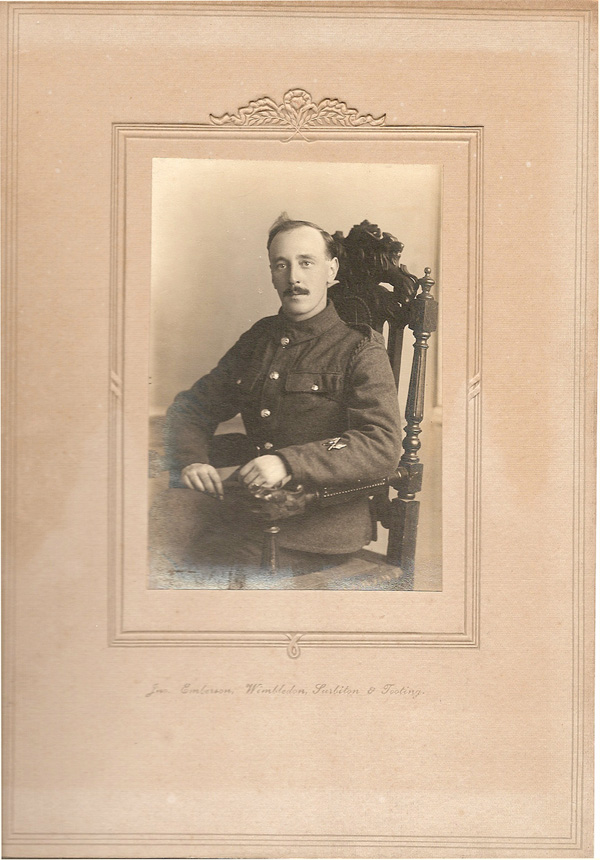
Herbert Charles Nuthall in uniform
Herbert Charles Nuthall. By kind permission of Brian Denny

H. C. Nuthall
Service no. 7498
Private, Royal Warwickshire Regiment, 1st Battalion
Born in Camberwell; enlisted in London; lived in Brixton
Killed in action on 25 April 1915, age 31
CWGC: “Son of Henry and Jane Nuthall, of Lambeth, London; husband of Gertrude Beatrice Nuthall, of 12, Lingham Street, Stockwell, London.”
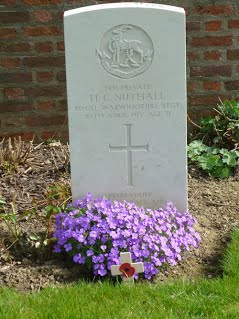
Remembered at Seaforth Cemetery, Cheddar Villa, Belgium

Herbert Charles Nuthall.
Herbert Charles Nuthall. Photo © Marietta Crichton Stuart. The headstone has the following inscription: “From strife to the peace and love of God” Marietta Crichton Stuart writes: “The cemetery is a fairly rare instance of a battlefield cemetery, originally called Cheddar Village, the Commanding Officer of the 2nd Bn Seaforth Highlanders later asked if the name could be changed to Seaforth as 100 of the 127 burials belonged to that Battalion. Herbert’s headstone was very clear and so must have been recently cut.”

Brian Denny, Herbert Charles Nuttall’s great-grandson, says he may have been a witness to the Christmas truce of 1914 and the first gas attack in April 1915, as his regiment was in the vicinity of both. Brian has written this beautiful song in memory of Nuthall.
http://youtu.be/4slLT8aC3sA


Filed Under: Featured, N names, Stockwell War Memorial Tagged With: 1915, age 31, Belgium, KIA

Alfred William Newcombe

16 August 2015 by SWM

Alfred William Newcombe
Alfred William Newcombe. Photo © Richard Jones

A. W. Newcombe
Service no. 33465
Private, Bedfordshire Regiment, 8th Battalion
Born at Marylebone; enlisted at Bedford; lived at Watford, Hertfordshire
Killed in action on 27 June 1917, aged 23
Son of William Newcombe, of 96 Southville, Clapham Common, London.
Remembered at Philosophe British Cemetery, Mazingarbe, France

Information from the 1911 census
Alfred Newcombe, 17, worked as a grocer’s assistant and lived at 89 Priory Grove, where his family occupied four rooms. William Newcombe, his 42-year-old father, was a labourer from Wembworthy, North Devon; his mother, Betsy Eady, 43, was from Peterborough. Alfred’s sister, Maud Newcombe, 16, born in Clapham, worked in a factory.

Information from the William Alfred Newcombe’s family
Newcombe was born on 14 September 1893 at Queen Charlotte’s Hospital, Marylebone Road to Betsy Eady, a night light maker of 98 South Ville, off Wandsworth Road. Newcombe was born William Alfred Eady. His mother married William Newcombe on Christmas Day 1893 and he appears to have taken that name.
Newcombe was always known as ‘Alf’.

Filed Under: Featured, N names, Stockwell War Memorial Tagged With: 1917, age 23, France, KIA

  • « Go to Previous Page
  • Page 1
  • Page 2
  • Page 3
  • Page 4
  • Page 5
  • Interim pages omitted …
  • Page 9
  • Go to Next Page »

Footer

The Men of Stockwell

  • All the men
  • Died on 1 July 1916
  • Brothers
  • Listed on St Mark’s War Memorial
  • Listed on St Andrew’s War Memorial
  • Listed on St John’s War Memorial

SEARCH THE SITE

Other local memorials

  • St Mark’s, Kennington
  • St Andrew’s, Landor Road
  • St Michael’s Church shrine
  • Wynne Road sorting office
  • Brixton Town Hall
  • St John’s Church
  • Michael Church, Myatts Fields
  • St Mark’s War Shrine
  • St Anne’s War Crucifix
  • Clapham War Memorials

About this site

This site lists 574 men named on Stockwell War Memorial in London SW9.

If you would like to contribute information or images to the site, please email stockwellmemorialfriends@gmail.com

Copyright © 2025 · Genesis Sample On Genesis Framework · WordPress · Log in

  • All the men
  • Died on 1 July 1916
  • Brothers
  • Listed on St Mark’s War Memorial
  • Listed on St Andrew’s War Memorial
  • Listed on St John’s War Memorial